
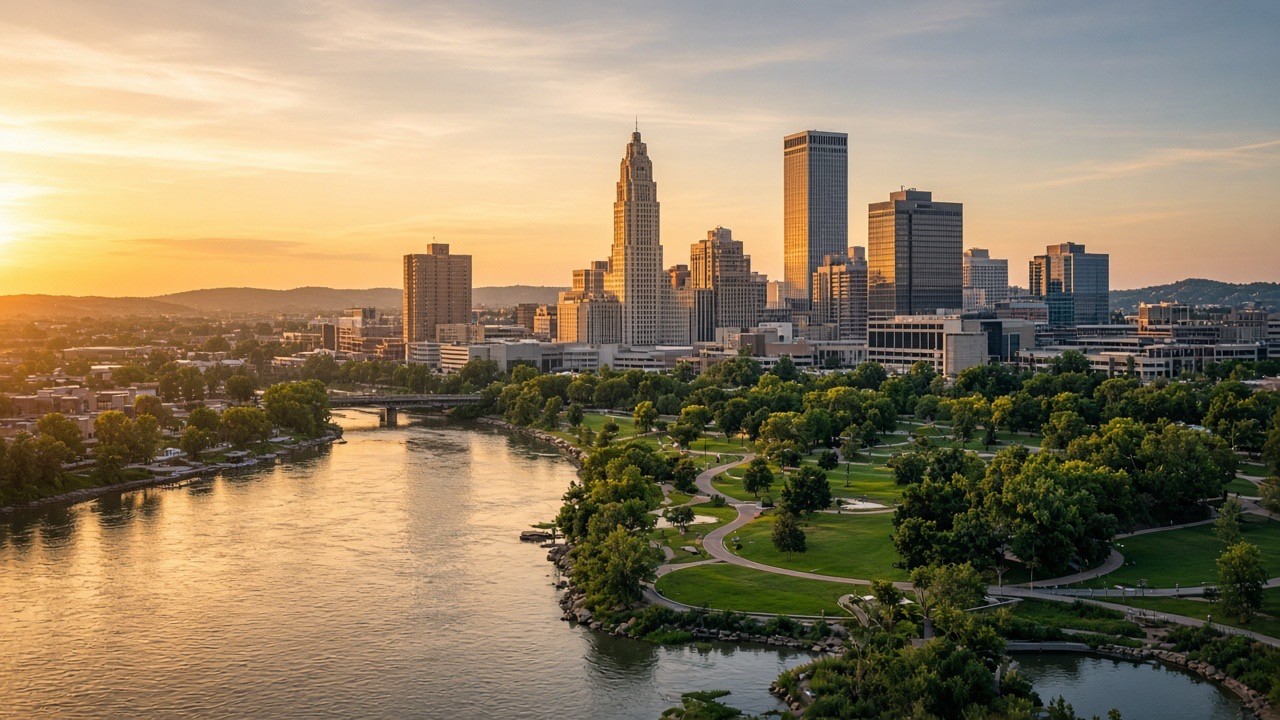
Why Tulsa and the Tulsa Metro Keep Showing Up as a Growth Hotspot
If you’ve been watching where people, startups, and housing dollars are moving, Tulsa, Oklahoma keeps making the short list. Not because of hype. Because the fundamentals stack up: more affordable housing than most major metros, a rising startup and remote-work scene, and one of the strongest young professionals networks in the country.
Here’s why the Tulsa metro has become such a hotspot for growth, and why buyers, builders, and relocators are paying attention.
Housing that still makes sense
Affordability is the first thing most people notice. Realtor.com market reports have repeatedly shown Tulsa priced well below the national median. In one recent metro snapshot, Tulsa’s median list price sat near the mid-$300,000s while the national median was meaningfully higher, and Tulsa still offered buyers more negotiating room through longer days on market and a healthy share of price reductions.
That gap matters. In coastal and high-cost Sun Belt markets, the same budget often buys less space, an older home, or a longer commute. In the Tulsa metro, buyers can still find options across new construction, luxury homes, and established neighborhoods without stretching every dollar to the edge.
For anyone searching “affordable homes in Tulsa,” “buy a house in Tulsa OK,” or “Tulsa housing market,” the story is consistent: growth without the same price shock many cities already lived through.
National attention from Forbes and others
This isn’t just a local talking point. Forbes Advisor ranked Tulsa among the top places for young professionals when it compared the 100 most populous U.S. metros on employment and pay, housing affordability, lifestyle, and cost of living. Tulsa landed at No. 11 in that analysis, with housing affordability as a clear strength.
Forbes has also covered Tulsa’s talent play, including Tulsa Remote, the program that helped put the city on the map for remote workers with relocation support, coworking access, and a real quality-of-life pitch. That coverage helped reframe Tulsa from “oil town” to a city actively competing for talent.
Startups, remote workers, and a bigger talent base
The startup and remote-worker story is a big part of the growth. Tulsa Remote has brought thousands of workers to the city since launch, with recent reporting putting arrivals past the 4,000 mark and hundreds of millions of dollars in employment income contributed to the local economy. Programs like Tulsa Innovation Labs, incubators, and coworking hubs have also helped build a more intentional tech and entrepreneur ecosystem on top of Tulsa’s energy and aerospace roots.
When startups and remote professionals move in, they rent, buy, hire, and spend. That demand supports restaurants, services, and housing, including new construction and renovations across the metro.
One of the largest young professionals networks in the U.S.
Talent sticks when community is strong. TYPROS (Tulsa’s Young Professionals), a Tulsa Regional Chamber initiative, is widely described as one of the largest and leading young professionals organizations in the country. Free membership, leadership tracks, civic projects, and a real social network give newcomers and locals a way to plug in fast.
That matters for employers recruiting here, and for homebuyers deciding whether Tulsa is a short stop or a long-term base. People don’t just move for a job. They stay for a network.
Quality of life without the big-city premium
Growth stories fall flat if the city itself doesn’t deliver. Tulsa’s Arts District, Gathering Place, museums, music venues, and walkable pockets give the metro a lifestyle punch that punches above its size. Commute times are generally easier than in larger metros. You can live close to work, culture, and outdoor space without paying coastal prices for the privilege.
For luxury buyers and custom-home clients, that combination is powerful: more house, more land or finishes for the dollar, and a city that still feels like it’s building upward.
What this means if you’re buying or building
If you’re looking at Tulsa real estate, relocating to the Tulsa metro, or comparing new construction here versus higher-cost markets, the opportunity is real:
- More purchasing power for the same budget
- A growing employment and startup base supporting long-term demand
- A deep young professionals network that keeps talent here
- National recognition that continues to put Tulsa on relocation shortlists
Markets move. Affordability advantages can narrow over time. The buyers and builders who treat Tulsa as a growth market now, rather than waiting for every national headline to catch up, are usually the ones who lock in the better location, lot, or floor plan first.
If you’re thinking about buying a home in Tulsa, exploring new construction, or relocating to the metro and want a clear read on neighborhoods, builders, and timing, I’m happy to walk you through it.
Sources worth reading
- Forbes Advisor (via coverage of its best places for young professionals ranking): Tulsa among the top metros for young professionals
- Forbes: Tulsa’s Charms And $10,000 Woo Remote Workers
- Realtor.com: Tulsa market coverage (and related local market reports)
- Tulsa Remote economic impact reporting and TYPROS / Tulsa Regional Chamber materials on the young professionals network